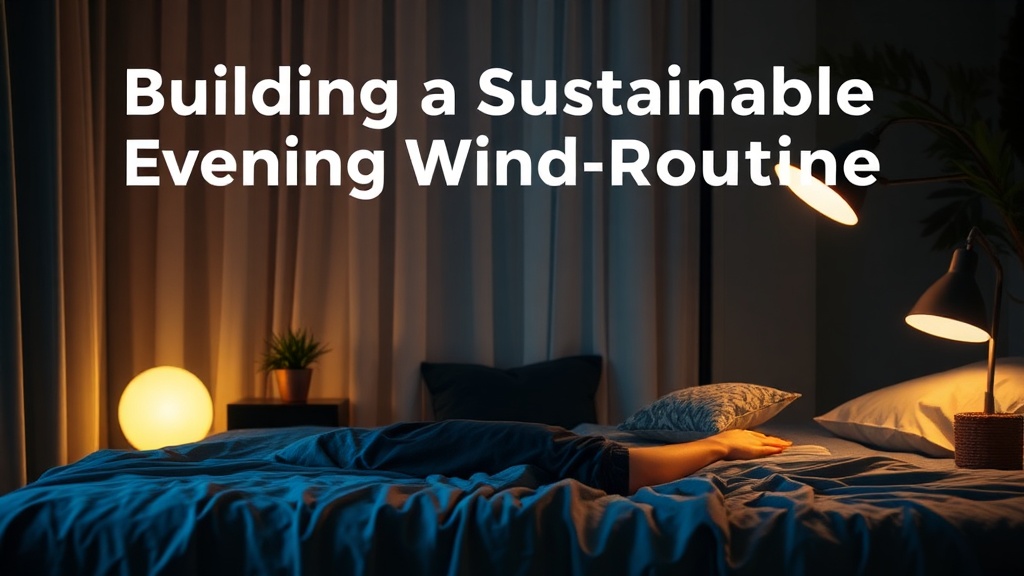
Building a Sustainable Evening Wind-Down Routine

In this guide, you will learn how to construct a repeatable evening sequence that signals to your nervous system that the day is over. We will cover the physiological shifts required for rest, the environmental changes that improve sleep quality, and how to move from high-output productivity into a state of physical and mental ease.
Most people treat the hours before bed as a disorganized scramble. You finish one task, check your phone, perhaps feel a bit of guilt about work left undone, and then wonder why you are still staring at the ceiling at 2:00 AM. A structured wind-down isn't about perfection; it's about creating a predictable buffer between the chaos of the day and the stillness of the night.
Can a consistent wind-down improve sleep quality?
The short answer is yes. Your body operates on a circadian rhythm—an internal clock that relies on external cues to function. When you constantly disrupt this rhythm with bright lights or high-stress activities late at night, you confuse your biology. By implementing a set sequence of low-stimulation behaviors, you are essentially training your brain to recognize the arrival of rest.
Research from the Sleep Foundation suggests that consistency is one of the most effective ways to regulate your internal clock. This isn't just about feeling sleepy; it's about the biological transition from the sympathetic nervous system (fight or flight) to the parasympathetic nervous system (rest and digest). If you spend your final waking hour in a state of high alertness, your cortisol levels might stay elevated, making deep sleep nearly impossible.
To make this work, you don't need a two-hour ritual. You just need a few non-negotiable-looking signals. This might mean dimming the lights, putting away the laptop, or even changing your physical environment. The goal is to reduce sensory input so your brain can naturally begin its descent into sleep.
How do I stop my brain from racing at night?
Mental chatter is often the biggest obstacle to rest. You might find yourself replaying a conversation from lunch or worrying about a meeting tomorrow. This happens because the brain uses quiet time to process unresolved information. To stop this, you need a way to externalize those thoughts before they become a loop in your head.
One effective method is a "brain dump." Instead of keeping your to-do list in your head, write it down on physical paper. This act of transferring information from your mind to a notebook tells your brain that the information is safe and won't be forgotten, allowing it to let go. It's a simple, low-tech way to close the mental loops of the day.
You can also use specific mindfulness techniques to ground yourself. Rather than fighting the thoughts, observe them. Treat each thought like a passing car on a street—notice it, acknowledge its presence, and let it pass without jumping into the passenger seat. This creates a distance between your identity and your temporary mental state.
Practical Steps for a Better Evening
A successful routine relies on small, manageable shifts rather than a total lifestyle overhaul. Consider these three pillars for your evening:
- Light Management: About an hour before bed, turn off overhead lights and use lamps with warm tones. This encourages melatonin production.
- Temperature Regulation: A slight drop in core body temperature is a signal for sleep. A warm bath or even just cooling down your room can help.
- Digital Boundaries: The blue light from screens is a known disruptor, but the mental stimulation from social media or news is often more damaging. Set a "digital sunset" where all screens are set aside.
If you find yourself struggling with the physical sensation of anxiety, breathing exercises can be a powerful tool. The Healthline medical reviews often highlight how rhythmic breathing can physically lower your heart rate and settle the nervous system. Try the 4-7-8 technique: inhale for four seconds, hold for seven, and exhale for eight. This is a direct way to communicate safety to your body.
What are the best low-stimulant activities for late night?
When you are winding down, your goal is to avoid anything that triggers a dopamine spike. This includes most video games, intense movies, or even heated political debates. Instead, aim for activities that are "low-arousal." This could be reading a physical book, listening to ambient music, or engaging in light stretching.
Physical movement should also be considered. While heavy exercise late at night can keep you awake, gentle movements like Yin Yoga or basic mobility work can help release physical tension stored in the muscles. This tension is often invisible to us during the day, but it becomes much more apparent once we try to lie down and realize our shoulders are hunched or our jaw is tight.
By focusing on these low-stimulant activities, you are not just "waiting" for sleep to happen; you are actively preparing the ground for it. It's the difference between trying to force a door shut and simply letting it swing closed naturally. Each of these small choices—the dim light, the notebook, the breathing—is a brick in the foundation of your long-term well-being.